WHY QUALIFICATION FOR THE WORLD CUP CHANGES A COUNTRY'S DESTINY
Qualifying for a FIFA World Cup is not just a
sporting achievement. For many countries, this qualification represents an
economic, political, cultural, and social victory. Behind the celebrations in
the stadiums often lies a profound transformation of national image and
momentum. As the 2026 World Cup, co-hosted by Canada, the United States, and
Mexico, approaches, FIFA plans to distribute over one billion dollars to
participating teams. This financial windfall confirms that global football is
now also a strategic industry.
A QUALIFICATION WHO
GAINS MILLIONS
FIFA has increased the
prize money for teams that qualify for the 2026 World Cup. Even nations
eliminated in the first round will receive several million dollars. The future
world champion will pocket approximately $50 million, while the runner-up will
receive $33 million. Teams eliminated in the group stage will receive nearly $9
million, in addition to approximately $1.5 million for logistics and travel
expenses. For many countries, particularly in Africa, Asia, and Central
America, these funds represent a major opportunity. They can be used to finance
training centers, sports infrastructure, youth academies, and grassroots
football development programs. In some cases, qualification alone is enough to
unlock new public and private investments in the sport.
FIFA
has increased the prize money awarded to teams that qualify for the 2026
edition.
AN EXPLOSION OF POPULAR
JOY
Qualifying for the World
Cup often sparks exceptional national fervor. In many countries, streets fill
with jubilant fans, national flags appear on balconies and in windows, while
patriotic songs resonate late into the night. Football then becomes much more
than a sport: it transforms into a powerful symbol of unity and national
identity. When this qualification comes after a long absence or for a historic
first participation, the popular emotion reaches an even greater level.
Governments, the media, and businesses sometimes join in this collective surge
by adjusting work schedules, installing giant screens in public spaces, or even
declaring public holidays to allow the population to follow the matches.
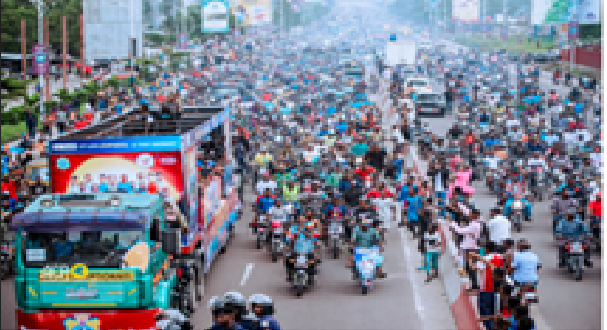
This is precisely what the
Democratic Republic of Congo experienced with the Leopards' qualification for
the 2026 World Cup, after a 52-year wait. This historic return of the Leopards
to the world stage goes far beyond the realm of sport. In a country facing significant
social, economic, and security challenges, this qualification was experienced
as a rare moment of national unity and collective pride. For several hours,
political, ethnic, and regional divisions seemed to fade away, replaced by a
shared sense of patriotism. In Kinshasa, Lubumbashi, Goma, and Kisangani,
scenes of popular jubilation testified to the deep attachment of the Congolese
people to their national team.
The media disrupted their
programming to cover the celebrations, while numerous businesses and
institutions adjusted their schedules to allow employees and customers to fully
experience the event. In several public spaces, giant screens were set up to
broadcast the Leopards' matches, creating genuine spaces for popular communion.
On social media, the emotion spread far beyond the country's borders, also
mobilizing the Congolese diaspora in Europe, North America, and other parts of
Africa.
When
this qualification comes after a long absence or for a historic first
participation, the popular emotion reaches an even stronger dimension.
This kind of fervor is not
unique to the DRC. In 2018, Panama experienced similar national euphoria after
its first-ever qualification for a World Cup, held in Russia. The event was
considered historic, to the point that the Panamanian authorities declared a
national holiday to allow the entire population to celebrate this unprecedented
achievement.
A GLOBAL SHOWCASE FOR NATIONAL
TALENTS
The World Cup also
provides a fantastic platform for international visibility. Players attract the
attention of major European clubs, increasing their market value and enhancing
the reputation of national football. For sports federations, qualification
strengthens the credibility of development projects and encourages sponsors to
invest more. Countries like Morocco, Senegal, Japan, South Korea, and Costa
Rica have greatly benefited from this international exposure over the years.
Morocco's historic run at the 2022 World Cup in Qatar, in particular, boosted
the prestige of African and Arab football on a global scale.
Players attract the
attention of the biggest European clubs, which increases their market value and
improves the reputation of national football.
AN ECONOMIC IMPACT BEYOND
FOOTBALL
The economic benefits
extend far beyond sporting revenue. Participation in the World Cup stimulates
tourism, advertising, broadcasting rights, and commercial activities related to
media and social networks. Studies conducted after the 2022 World Cup showed
that visitors, sponsors, and media generated several billion dollars in
economic activity around the competition. For smaller economies, this international
visibility can attract foreign investors and improve the country's image
abroad. In some nations, the World Cup even becomes a diplomatic and cultural
tool. It allows them to project a positive image of the country and strengthen
its influence on the world stage.
WHEN FOOTBALL STRENGTHENS NATIONAL
UNITY
In many countries,
football transcends mere entertainment, becoming a powerful force for national
unity and a powerful affirmation of identity. Qualifying for the World Cup can
bring together populations sometimes divided by political, social, regional, or
historical tensions. For a few weeks, differences seem to fade behind a shared
flag, a single anthem, and a shared collective passion.
The Democratic Republic of
Congo perfectly illustrates this symbolic dimension of football. The Leopards'
qualification for the 2026 World Cup sparked an immense sense of national
belonging, both within the country and among the Congolese diaspora scattered
across the globe. In Paris, Brussels, London, Montreal, Johannesburg, and
Washington, many Congolese celebrated this qualification as a personal and
collective victory. For many members of the diaspora, often separated from the
country for many years, the Leopards represent a powerful emotional link to their
homeland.
Through the national team,
they reaffirm their Congolese identity and their attachment to the nation. This
fervor also reached regions facing particularly difficult situations. In Goma,
a city scarred by armed conflict and marked by the presence of the M23 rebels,
the Leopards' qualification was also experienced as a moment of national unity.
Despite security tensions and the divisions caused by the war, a significant
portion of the population recognized themselves in this sporting victory and in
the national colors.
For a few moments,
football offered what politics sometimes struggles to create: a feeling of
unity, solidarity, and shared hope. It is precisely this capacity to transcend
divisions that makes the World Cup such a powerful event on a human and
symbolic level.
A HISTORIC OPPORTUNITY FOR
NEWLY QUALIFIED COUNTRIES
For countries experiencing
the competition for the first time, each World Cup appearance opens a new
chapter in their national history. For many small nations, qualification
represents far more than a simple sporting achievement: it symbolizes
international recognition, increased visibility, and an immense source of
collective pride.
The case of Cape Verde
perfectly illustrates this reality. This African archipelago of fewer than one
million inhabitants has gradually established itself as one of the emerging
nations of African football. Long considered an outsider, Cape Verde has
succeeded, over the years, in building a competitive national team, driven by a
talented generation often playing in European leagues. A first-time
qualification for the World Cup would be a historic event for the country. It
would not only strengthen national cohesion but also offer this small island
nation an exceptional showcase on the international stage. In several
countries, this type of performance has also had lasting repercussions on the
development of sport. The successes of the national team often encourage young
people to play more football, stimulate the development of training centers, and
prompt authorities to modernize sports infrastructure. Thus, qualifying for the
World Cup can become a real driver of social, educational, and cultural
development.
In Paris,
Brussels, London, Montreal, Johannesburg or Washington, many Congolese celebrated
this qualification as a personal and collective victory.
Over the years, the World
Cup has become a true economic and cultural catalyst. The countries that
benefit most are often those that use this visibility to invest sustainably in
sport, tourism, youth development, and infrastructure. Because beyond trophies
and results, qualifying for the World Cup can transform a nation's image,
strengthen social cohesion, and leave a lasting mark on a people's history.
No comments for the moment