TESTIMONY OF CLARISSE BANDOUENGA WOUMBA CELEBRATING LIFE AFTER TUBERCULOSIS
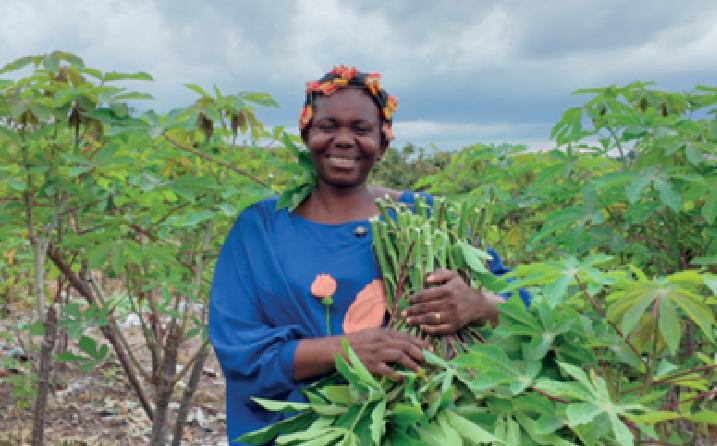
In Kombo Matari, near Brazzaville, a young married life
almost ended before it had even truly begun. Just a few weeks after her
wedding, Clarisse Bandouenga Woumba, a seamstress, saw her body deteriorate
without explanation: persistent fever, cough, night sweats, and rapid weight
loss. "November, December, January, I was losing weight," she
recalls.
The initial treatments
administered made no difference. Worried, the family went to Blanche Gomes
Hospital in Brazzaville, then to the Center for Major Endemic Diseases for
further examinations. The diagnosis came back: tuberculosis. The shock was
devastating."I cried all day.", she says. Beyond the illness, it is
the fear of infecting her children and seeing her future collapse that overwhelms
her.
Yet, behind this devastating
diagnosis, a comprehensive care system was put in place. Clarisse began a
six-month treatment. The side effects were difficult but gradual, and her
condition improved. She gained weight, regained her strength, and above all,
found hope. In a country like the Republic of Congo, where tuberculosis remains
one of the leading infectious threats, her story illustrates both the
vulnerability of patients and the progress of the healthcare system. In 2024,
approximately 19,000 people were affected by the disease.
But the combined efforts of the
Ministry of Health, UNDP, the Global Fund, and their partners have reduced
cases by 13% and mortality by about a third since 2015. On the ground, this
progress also relies on discreet but essential actors. In Brazzaville, Mary
Vincent Paola Passy Mambou ensures the secure transport of biological samples.
She travels sometimes difficult distances, guaranteeing that the samples arrive
at the laboratories on time.
This often invisible logistical
link reduces the geographical and financial barriers that still prevent many
patients from accessing diagnosis. For despite free testing and treatment,
indirect costs—transportation, lost income, and distance from healthcare
facilities—continue to be significant. Nearly one in three families still faces
financial hardship related to the illness.
The technological advances,
however, are very real. The National Reference Laboratory for Mycobacteria in
Brazzaville, upgraded to biosafety level 3 according to WHO standards, now
allows for faster and safer diagnoses. The introduction of rapid molecular
tests such as Xpert MTB/RIF in 31 healthcare facilities has significantly
improved detection, particularly of resistant strains. "Results are available
in about 24 hours. Patients appreciate this speed," explains Dr. Darrel
Ornelle Elion Assiana, head of the laboratory.
This acceleration changes
everything: earlier treatment, safer medical decisions, and better monitoring
of resistant cases. Between 2022 and 2024, the use of WHO-recommended tests
increased by 133%, and bacteriological confirmation of cases more than doubled.
For Clarisse, this system made
all the difference. After several months of treatment, she finally received
confirmation of her recovery. A personal, intimate, almost silent victory.
"I was cured," she says simply, as if breathing again.
Its story is part of a larger
movement: that of a country trying to push back one of the world's deadliest
infectious diseases, which was still responsible for more than a million deaths
in 2024. But it also highlights a more fragile reality: without sustainable
funding and sustained efforts, progress can easily be reversed.
However, behind this serious diagnosis, a care plan is
put in place. Clarisse begins a six-month treatment.
At the end of the journey, one
thing becomes clear. Fighting tuberculosis is not just about treating a
disease. It's about rebuilding lives, providing security for families, and
strengthening a healthcare system capable of sustaining the long term. And in
this fight, every recovery, like Clarisse's, becomes more than a medical
outcome: it's a sign that life can go on, despite everything.
No comments for the moment