TESTIMONY FROM MOM SYLVIE " I DON'T WANT TO HIDE"
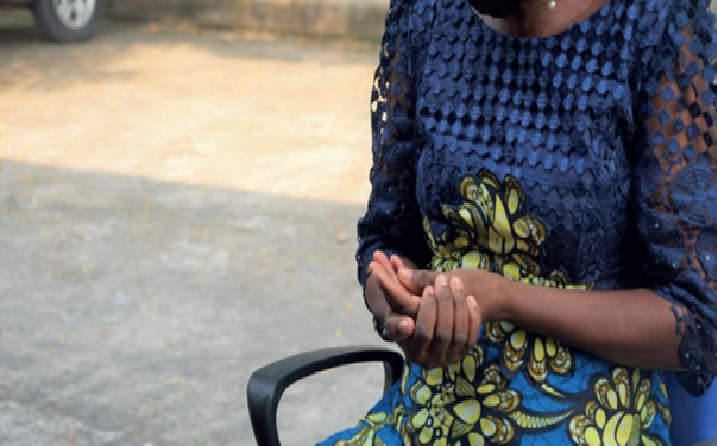
Diagnosed as HIV-positive during a prenatal consultation,
Maman Sylvie had to face the shock of the announcement, the stigmatization and
the prejudices.
Today, she uses her experience to help others by
supporting people living with HIV in the Republic of Congo. Her powerful
testimony reminds us that HIV is no longer a death sentence, but a chronic
illness that can be managed through treatment and psychosocial support.
For Maman Sylvie, being diagnosed HIV-positive should
never be seen as a death sentence. Quite the opposite. This 47-year-old woman,
living in Brazzaville, has decided to dedicate her life to supporting people
living with HIV/AIDS in the Republic of Congo.
For Sylvie, this fight is deeply personal, since she herself has been living with HIV for 15 years. "I was pregnant at the time and I went to the hospital for a prenatal consultation," she recounts. "There were 22 women, but only two of us agreed to take an HIV test. It was following this test that I learned I was HIV-positive."
THE
ANNOUNCEMENT OF THE DIAGNOSIS IS A REAL SHOCK
“When I received the result, my life stopped. My
whole body was shaking.” A mother of four, Sylvie immediately informed her
partner, who also agreed to be tested. His result was negative. She then had to
learn to live with a disease that, at the time, was still widely perceived as a
death sentence. “A member of my family had already started organizing my
funeral,” she recounts. “But I knew I was going to survive. It took time, but I
accepted the disease and understood that with a little discipline, I could
continue to live.”
At that time, people living with HIV were heavily
stigmatized. Out of fear of rejection, Sylvie kept her HIV status a secret for
many years. "In the end, the illness hurts less than the rejection and
mistrust," she confides. "Many people still associate HIV with prostitution,
which is completely false."
Over time, she decided to turn her experience into a
strength. She began advocating for the rights of people living with HIV, before
becoming a counselor at a support center for people infected and affected by
HIV/AIDS. Today, as a community mediator within an NGO supported by a grant
from the Global Fund to Fight AIDS, Tuberculosis and Malaria, Sylvie assists
patients in accessing healthcare services and provides them with psychosocial
support.
Community mediators also play a vital role in
preventing treatment interruptions, which can lead to treatment failure or the
development of resistance to antiretroviral (ARV) drugs. "I use my own
story to show people that you can live with HIV and lead a normal life,"
she explains.
In February of that year, the United Nations
Development Programme (UNDP) in the Republic of Congo received more than 27
million euros, or about 18 billion CFA francs, from the Global Fund as part of
the project to strengthen the national response against HIV and tuberculosis.
This funding aims to improve access to HIV,
tuberculosis, and malaria prevention, testing, and treatment services, while
sustainably strengthening the health system. Particular attention is being paid
to pregnant women to increase their access to antiretroviral treatment.
During the lockdown implemented in response to the
COVID-19 pandemic, reaching people living with HIV became particularly
difficult.“We organized ourselves to ensure continuity of treatment,” explains
Sylvie. “With travel restricted, we went directly to patients’ homes. We wanted
to avoid any interruption of treatment at all costs, as the consequences can be
fatal. My testimony during counseling sessions is very important. My experience
gives hope to others.”
THE
PANDEMIC HAS ALSO WORSENED THE PRECARIOUS SITUATION OF MANY FAMILIES.
The COVID-19 pandemic has also exacerbated the
precarious situation of people living with HIV and their families. Deprived of
income after losing their jobs, many found themselves in a highly vulnerable
position. “The food kits distributed by UNDP were invaluable support for people
who could no longer afford to feed themselves,” explains Sylvie. “The pandemic
has intensified the difficulties faced by many families. Some children were
even abandoned after the death of their parents, victims of the prejudices and
misconceptions that still surround HIV.”
DESPITE
THE DIFFICULTIES, SYLVIE REMAINS OPTIMISTIC.
“I am convinced that considerable progress has been
made over the last decade. We are still alive because the efforts of the State,
partners and community actors continue. We must avoid self-stigmatization.”
No one should exclude themselves. Feeling supported
by healthcare services and public authorities is essential psychologically.
Today, the fight against HIV continues with new challenges, but the stigma is
gradually diminishing. As for me, I no longer want to hide.
The national response to HIV and Tuberculosis
benefits from the new 2024-2027 funding cycle of the Global Fund (GC7).
Signed in partnership with the Ministry of Health
and the United Nations Development Programme (UNDP), this €32,659,607 grant
aims to halve new HIV infections by 2027, reduce AIDS-related mortality,
improve access to prevention and treatment services, remove human rights and
gender-related barriers, and strengthen tuberculosis care. The program also
includes enhanced social support for people living with HIV and the most
vulnerable populations.
No comments for the moment