SEVEN QUESTIONS TO MESSILAH NZOUSSI
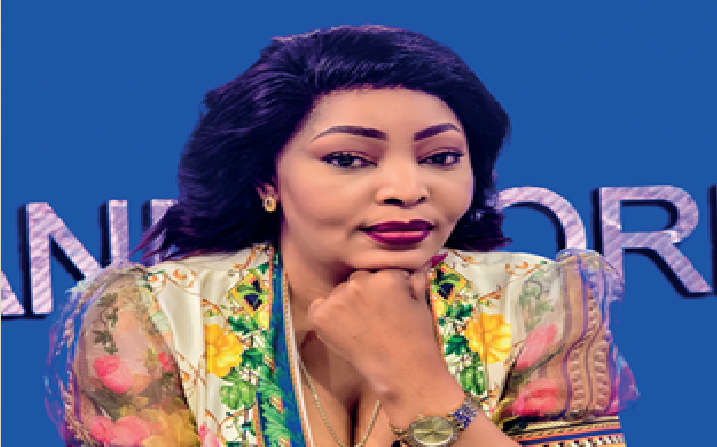
As
a news anchor for Télé Congo, president of the national committee of the Pan-African
Network of Journalists (RJP) in Congo-Brazzaville, patron of the Francophonie
Youth Games, and recently appointed ambassador for the "Teenage Girls'
Corner," Messilah Nzoussi has established herself as one of the most
influential figures in Congolese journalism and women's leadership. Through a
career marked by high standards, perseverance, and commitment, she has made the
media a powerful tool for information, empowerment, and social transformation.
In
this interview with Le Metropolis magazine, she reflects on the major
milestones of her career, shares her vision of inspiring female leadership, and
discusses the values that guide her work in support of youth, quality
journalism, and the advancement of women. Messilah Nzoussi, an iconic figure at
Télé Congo's evening news, was recently honored by the Congolese Online Press
Association (APLCO) for her professionalism, rigor, and commitment to Congolese
youth. This award recognizes an exemplary career and her dedication to
promoting young talent. Visibly moved, the journalist dedicated this
distinction to her colleagues and viewers, seeing it as an added
responsibility: to continue serving with excellence.
By Jérôme Batungassana
"Congolese journalism still has many great
chapters to write. I wish, with consistency and conviction, to contribute to
this history."
1.
THE METROPOLIS: You are currently the president of
the national committee of the Pan-African Network of Journalists in
Congo-Brazzaville and the godmother of the Francophonie Youth Games.
Your recent election as head of the Congolese
chapter of the Pan-African Journalists Network (PJN) marks a new stage in your
career. What does this responsibility represent for you, and what vision do you
hope to bring to this mandate? More broadly, what role does female leadership
play today in the media and youth sectors in Africa?
MESSILAH NZOUSSIThis
election represents both an honor and a responsibility. To represent the voice
of Congolese journalists within a pan-African network is to defend rigorous,
credible journalism deeply connected to the realities of our people. It is also
to assume a responsibility towards a profession I profoundly respect and
towards those who practice it with dedication, sometimes under difficult
conditions. My vision for this term rests on three pillars: professionalism,
solidarity, and the passing on of knowledge.
I hope that Congolese
journalists will be better trained, better equipped, and more represented on
the continental stage. Regarding women's leadership in the media, I can attest,
as a professional in the sector, that the Congolese media landscape today
presents a particularly encouraging picture. Women are numerous on screen, but
also in positions of responsibility. At Télé Congo, women head the Programming
Department and the Production Department. Not so long ago, a woman also held
the position of News Director.
Many women are also heads of
departments. In private media, the General Management of DRTV is headed by a
woman, as is the News Directorate of Vox TV.
On this point, let me be
perfectly clear: in Congo, we no longer have any real demands to make regarding
women's access to positions of responsibility in the media. The facts
demonstrate that they perform these functions with competence and legitimacy.
The challenge now is to consolidate these
achievements over the long term and promote their expansion to other media and
youth-related sectors across the continent. It is in this spirit that I intend
to carry out my mandate: to strengthen national achievements while
contributing, on a pan-African scale, to inspiring other countries.
2
What are the priorities of your term as head of the
RJP? What initiatives have you already undertaken and what are the main
projects you wish to bring to fruition in the coming months?
My priorities can be summed
up in three verbs: train, structure and open. Train, because I have seen too
many talented young colleagues develop without real support.
Today, artificial
intelligence is an integral part of our daily lives. It is profoundly
transforming our working methods, our information verification practices, and
our way of producing content.
Congolese journalists cannot
remain on the sidelines of this evolution. I therefore hope that our colleagues
will be trained in these new tools, that they will understand their
opportunities as well as their limitations, in order to preserve the
credibility of information and maintain Congolese journalism at continental and
international standards. Furthermore, they must structure themselves, because a
network without a solid organization cannot exert lasting influence on
institutions.
Finally, we will open the
network to other professional organizations across the continent to foster the
exchange of experiences and cooperation. In practical terms, I have already
begun meeting with numerous colleagues in Brazzaville and will soon be meeting
in Pointe-Noire. In the coming months, we will organize practical workshops on
artificial intelligence, journalistic ethics, and the new challenges of the
profession, while also developing partnerships with other national chapters of
the RJP.
3
Your career in the media, particularly at Télé
Congo, demonstrates a consistent commitment to rigorous and professional
journalism. What were the main challenges you faced as a female journalist, and
what qualities enabled you to transform them into opportunities for success?
The main challenge was
having my professional legitimacy recognized. When you appear on screen, many
people imagine that all you need to do is be a presenter. They forget the long
hours of preparation, the research, the field reporting, and all the editorial
work that precedes a television news broadcast.
My vision for this mandate
rests on three pillars: professionalism, solidarity, and transmission.
I often had to demonstrate
that my skills weren't simply a matter of image, but were based on genuine
journalistic expertise. There was also a more personal challenge: finding my
place without sacrificing my personality, without thinking I had to become
tough to be respected. Over time, I understood that determination could
perfectly well be expressed with serenity. It's this quiet tenacity that
allowed me to move forward.
4
Having made your mark on Télé Congo's television
news and received several awards for your professionalism, do you consider your
election as head of the RJP as the natural culmination of your commitment to
the development of Congolese and African journalism?
No, honestly. I don't see it
as an end point. An end point suggests a conclusion, whereas I still have so
many projects to complete. I see this responsibility as an invitation to
continue my commitment. I've had the honor of receiving two awards that have
marked my career: the Congolese Press Oscar for Best News Anchor in 2019, and
then the African Media Trophy for Best Regional News Anchor in 2021. These
awards have deeply honored me, but I've never considered them as milestones.
Rather, they serve as additional motivation to continue serving a journalism
that is useful, demanding, and close to the people.
5
One
of the RJP's missions is to promote quality journalism and prepare the next
generation. How do you support young journalists, particularly women, so that
they can access positions of responsibility and contribute to the evolution of
media on the continent?
I firmly believe in close, practical support based
on knowledge transfer. Passing on knowledge means taking the time to guide a
young journalist in preparing a script, an interview, or a broadcast.
It's about helping her overcome the stage fright of
her first appearances on set and gradually acquiring the necessary skills. As I
mentioned earlier, women's access to positions of responsibility in the
Congolese media is now a reality. The real challenge now is to strengthen their
skills so they can maintain their positions long-term.
The RJP intends to play this role fully by
developing training programs, mentorship, and professional opportunities for
young journalists, both women and men. Because what the next generation most
often lacks is not talent, but support and opportunities at the crucial moment.
6
6
Behind
the journalist, the leader, and the patron, there is also a woman. How do you
reconcile the demands of your career, your institutional responsibilities, and
your personal life? What advice would you give to young women who wish to
pursue an ambitious career without sacrificing their personal and family
balance?
I don't claim to have found a perfect balance; in
fact, I'm not even sure it truly exists. Behind the journalist you see on
screen, behind the leader and the godmother, there's a woman with her
aspirations, responsibilities, and limitations. I won't deny that this
profession demands many sacrifices. Some weeks are particularly intense,
between filming, official ceremonies, and various other responsibilities. It's
essential to know how to refocus on what's truly important.
If you truly want to succeed in this profession, you
must accept dedicating a significant portion of your time to your career,
sometimes at the expense of your personal life. It's not always easy, but it's
a reality. To young women who aspire to an ambitious career, I would say to
move forward with ambition, but also with clear-sightedness. Never pit your
professional success against your personal well-being. These two aspects can
develop harmoniously, provided you accept that each requires time, effort, and
sometimes a few sacrifices.
7
7
In
your opinion, what concrete measures should public authorities, press
companies, professional organizations and civil society implement to
sustainably strengthen female leadership in the media, in the Republic of Congo
and in Africa?
As I mentioned at the beginning of this interview,
the Congo is currently an encouraging example in terms of women's
representation in positions of responsibility in the media. This reality
deserves to be more widely known and valued across Africa. The challenge is no
longer simply to open doors, but to consolidate this presence sustainably.
Media companies must continue to invest in the
training and development of women in these roles so they can meet the
challenges of the sector's technological transformation. Professional
organizations must better document and promote these inspiring career paths so
they can serve as role models for the next generation.
Civil society, for its part, must remain vigilant to
ensure that these gains are preserved and consolidated. Across the continent,
the realities remain varied. This is why I hope that the Congolese experience
can inspire other countries through the exchanges and cooperation fostered by
the Pan-African Journalists Network. "Congolese journalism still has many
great chapters to write. I wish, with unwavering commitment and conviction, to
contribute to this story."
No comments for the moment