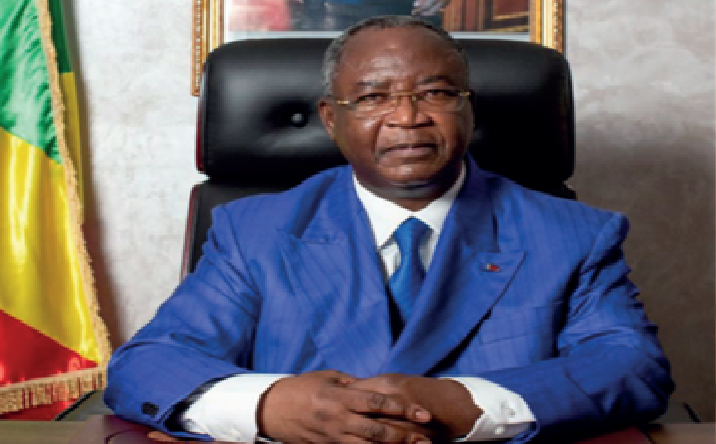
PROFESSOR JEAN ROSAIRE IBARA, MINISTER OF HEALTH AND POPULATION OF THE REPUBLIC OF THE CONGO
Re-elected as President of the Republic of Congo,
Denis Sassou-N'Guesso continues his ambition to build a more efficient,
resilient, and accessible healthcare system. Tasked with implementing this
vision since his appointment on January 14, 2025, Professor Jean Rosaire Ibara,
Minister of Health and Population, provides an exclusive interview with Le
Metropolis, outlining the reforms undertaken, discussing the sector's main
challenges, and presenting his priorities for the next five years. Interview.
By Jérôme Batungassana
THE METROPOLIS:
Mr. Minister, you have headed the Ministry of Health and Population since January 14, 2025. As President Denis Sassou-N'Guesso begins a new term, what is your assessment of the health policies implemented under his leadership? What, in your opinion, are the most significant achievements?
PROFESSOR JEAN ROSAIRE
IBARA:Is I would first like to warmly thankThe MetropolisThank you for the privilege of writing in your columns. It is an honor to be able to share with your readers the main directions of our policy health, at a time when the Republic of Congo is resolutely pursuing the modernization and strengthening of the resilience of its health system.
I also wish to express my profound gratitude to His Excellency Mr. Denis Sassou-Nguesso, President of the Republic, Head of State, and to the Prime Minister, Head of Government, for the trust they have placed in me by entrusting me with the leadership of public health policies. This trust is an honor for me, but above all a responsibility that I assume with the rigor of a physician and the determination of a statesman.
Healthcare is a vocation I chose in my youth. It is therefore with passion, commitment, and a sense of duty that I carry out this noble mission. Every reform undertaken, every decision made in this sector represents a commitment to life and a moral contract with our fellow citizens. It is in this spirit of responsibility, attentiveness, and collective action that I will answer your questions.
Under the leadership of President Denis Sassou-N’Guesso, a decisive step has been taken: health is now at the heart of public action. Among the most significant achievements are the provision of free essential care, including treatment for malaria and cesarean sections, as well as the construction of general hospitals in Djiri, Brazzaville, Ngoyo, Pointe-Noire, Sibiti, in the Lékoumou department, and Ouesso, in the Sangha department.
In addition to these achievements, there are the projects currently underway in Kinkala and Impfondo, which will contribute to further strengthening the healthcare provision across the entire national territory.
It is worth noting that these facilities are all equipped with state-of-the-art medical equipment and contribute to the President's commitment to providing the entire country with modern healthcare infrastructure. Furthermore, the gradual modernization of hospitals continues, notably through the rehabilitation and equipping of the Blanche Gomes Mother and Child Hospital, as well as the development of a national roadmap for Universal Health Coverage. These advancements reflect a strong political will and a collective responsibility.
Healthcare
is a vocation I chose in my youth. It is therefore with passion, commitment,
and a sense of duty that I carry out this noble mission.
In recent years, several reforms and investments have been undertaken in the health sector. Which programs, infrastructures, or initiatives best illustrate this commitment to modernizing the Congolese health system?
The most emblematic initiatives are undoubtedly the construction of new hospital infrastructure meeting international standards, as I just mentioned. These are complemented by major reforms aimed at improving the governance of the health system and the performance of public health programs.
I will cite in particular the strengthening of the supply chain for medicines and health products intended for programs to combat HIV/AIDS, tuberculosis, and malaria, implemented in partnership with the United Nations Development Programme (UNDP). These actions demonstrate our commitment to bringing healthcare closer to populations, securing the supply of essential medicines, and improving the traceability and effectiveness of our interventions.
How do you assess the current state of the Congolese health system? What are its main strengths, but also the priority challenges that your ministry will have to address during this new five-year term?
Our greatest strength lies in the remarkable commitment of healthcare professionals, the clarity of our strategic directions, and our country's capacity to respond to health emergencies. With each epidemic threat in the sub-region, Congo has demonstrated its ability to react swiftly to protect its population. This resilience is the result of a robust organization, continuous epidemiological surveillance, and the mobilization of all stakeholders. However, significant challenges remain: strengthening human resources, reducing territorial inequalities in access to care, modernizing technical facilities, accelerating the digital transformation of the healthcare system, and consolidating hospital governance.
The implementation of the Universal Health Insurance Fund (CAMU) is one of the most anticipated projects by the Congolese and an essential lever for achieving universal health coverage, in accordance with Sustainable Development Goal No. 3. Where does this project stand today?
The CAMU (Universal Health Coverage) is one of the most important social reforms of this new term. Its implementation will be gradual in order to guarantee its viability and effectiveness. The first beneficiaries will be the most vulnerable populations, including pregnant women, children, people living with disabilities and people in situations of extreme hardship.
The CAMU will cover a package of essential healthcare services, including life-threatening emergencies and obstetric care. Ultimately, it will reduce direct household expenses and bring Congo closer to the goal of universal health coverage. It is a powerful instrument of social justice and national solidarity.
Public-private partnerships are now considered a major lever for modernizing healthcare systems. What role do they play in your strategy?
Public-private partnerships are indeed a strategic lever for modernization. The Republic of Congo has established a specific legal framework with Law No. 88-2022 of December 30, 2022, concerning public-private partnerships, as well as a ministry responsible for its implementation. This political will reflects our ambition to mobilize more private investment in public health. We wish to strengthen cooperation in the construction and management of hospital infrastructure, digital
transformation, telemedicine, biomedical equipment, and innovation.
With
each epidemic threat in the sub-region, Congo has demonstrated its ability to
react quickly in order to protect its population.
A major priority is also to develop a national pharmaceutical industry capable of producing generic and essential medicines locally in order to strengthen our health sovereignty, reduce our dependence on imports and guarantee a regular supply to the population.
Human resources are one of the main challenges facing the healthcare system. What measures do you plan to take to improve the training, recruitment, and distribution of healthcare professionals?
Thanks to the exemplary cooperation between the Republic of Congo and the Republic of Cuba, more than 2,000 doctors have been trained. The three graduating classes have now returned to the country and are contributing to strengthening our healthcare system. Nearly two-thirds have already been integrated into the civil service and assigned to various healthcare facilities, while the others are working under contract with the Ministry pending their permanent integration.
We will continue recruitment efforts to gradually improve the doctor-to-population ratio in accordance with WHO recommendations. We will also continue to strengthen the motivation of healthcare staff, improve their working conditions, and ensure a more balanced distribution of skills across the country.
The Congolese diaspora is teeming with highly skilled doctors, researchers, and specialists. What strategy does the Government intend to implement to mobilize these talents?
I myself practiced medicine in France after completing my specialization. However, I chose to return home to put my skills at the service of my fellow citizens. This personal experience echoes the appeal repeatedly made by His Excellency Mr. Denis Sassou-N'Guesso to Congolese people in the diaspora: to return and contribute to national development.
Healthcare
is a vocation I chose in my youth. It is therefore with passion, commitment,
and a sense of duty that I carry out this noble mission.
I fully endorse this appeal. Congo needs all its skills. We are developing mechanisms to further involve the diaspora through expert missions, research programs, skills transfers, and university partnerships. We are also delighted to see more and more of our compatriots returning home to participate in modernizing our healthcare system.
Skills development also involves training. How does your ministry intend to strengthen partnerships with universities and international institutions?
The partnership between the Brazzaville University Hospital and Marien-Ngouabi University constitutes a model of cooperation between the health and higher education sectors. We want to go even further.
The National Institute of Biology and Health Surveillance, recently inaugurated by the President of the Republic, aims to become a center of excellence in
research, training, and epidemiological surveillance for Congo and Central Africa. We will continue to develop partnerships with universities, medical
schools, and international institutions to strengthen the quality of training, promote biomedical research, and better prepare our country for the health challenges of tomorrow.
The Congo continues its fight against malaria, tuberculosis, HIV/AIDS and other communicable diseases. What results have been achieved in recent years? The fight against major communicable diseases remains a national priority. Thanks to the Government's commitment and the support of our partners, we ensure free treatment for HIV/AIDS, tuberculosis, and malaria. The President of the Republic has given us very clear instructions: there must be no shortages of medication. This requirement reflects a strong political will to guarantee continuous access to essential treatments.
At the same time, we are strengthening epidemiological surveillance capacities, laboratories, rapid response teams, and emergency preparedness mechanisms to ensure the long-term
protection of the population.
Funding remains a major challenge for the transformation of the healthcare system. What contribution do you expect from technical and financial partners?
We
are also pleased to see more and more compatriots returning to the country to
participate in the modernization of our health system.
Funding is indeed one of the main challenges facing our healthcare system. The government is gradually increasing the resources allocated to this sector, but the needs remain considerable. That is why we will continue to strengthen our cooperation with technical and financial partners, whose support remains essential to accelerating the implementation of our reforms. In return, we will ensure rigorous, transparent, and efficient management of public resources. Only under these conditions will we maintain the trust of our partners and ensure the sustainability of the progress achieved for the benefit of the Congolese people.
No comments for the moment