PROFESSOR JEAN-BERNARD NKOUAMBON'S VISION FOR BUILDING THE UNIVERSITY HOSPITAL OF TOMORROW IN THE REPUBLIC OF CONGO
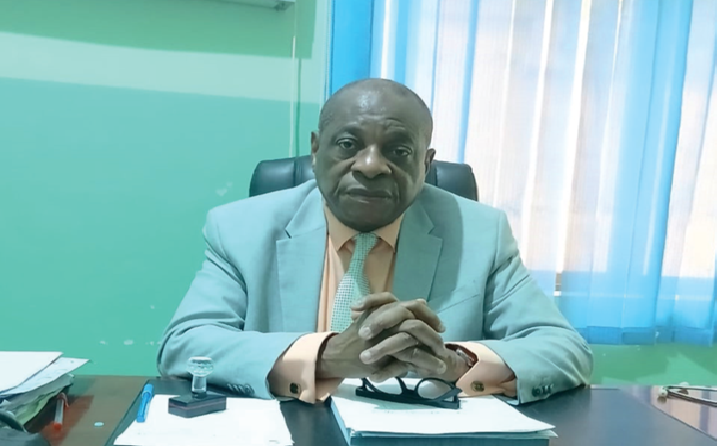
The University Hospital Centre
(CHU) is the beating heart of a high-performing healthcare system. It is where
the most complex cases are treated, where future doctors are trained, and where
medical innovations are born.
But should the university
hospital of tomorrow simply be a large hospital, or should it become a true
engine of healthcare development? In his book, "What Kind of University
Hospital for the Republic of Congo?", Professor Jean-Bernard Nkoua-Mbon
offers an ambitious and forward-looking vision for the future of Congolese
medicine. He outlines the contours of a modern university hospital, capable of
combining excellence in care, high-level training, scientific research, and
innovation in service to the population.
An
analysis by Jérôme Batungassana
THAT CHU FOR OUR HEALTH?
A UNIVERSITY HOSPITAL IS NOT A HOSPITAL. LIKE THE OTHERS
For many people, a
University Hospital Center (CHU) is primarily a place to consult specialist
doctors. However, this perception is reductive. By definition, a University
Hospital Center is a healthcare facility linked by agreement to a university
and entrusted with a threefold mission: care, training, and research. Professor
Jean-Bernard Nkoua-Mbon reminds us that a CHU fulfills three fundamental
missions that distinguish it from all other hospitals: treating patients with
the most complex illnesses, training future healthcare professionals, and
producing scientific knowledge through research.
“These three dimensions are
inseparable. Without teaching, a university hospital ceases to be a university.
Without research, it loses its capacity to innovate. Without quality care, it
no longer fulfills its primary mission,” the Professor emphasizes. For him, the
university hospital is the showcase of the entire Congolese healthcare system.
It is the place where medical innovations are developed, where knowledge is
passed on to new generations of practitioners, and where the most complex
clinical situations are managed. The quality of its operation thus reflects the
level of performance and excellence of the national healthcare system.
A university hospital is a healthcare facility linked by agreement to a
university and entrusted with a triple mission: care, training and research.
A MEDICINE PATIENT-CENTRIC
For Professor Jean-Bernard
Nkoua-Mbon, the performance of a university hospital is not measured solely by
the quality of its technical facilities or the skills of its specialists. It
rests primarily on an approach that places the patient at the heart of the
hospital organization and all medical decisions. This vision of medicine
implies faster and better-coordinated care, reduced waiting times, high-quality
reception, optimal patient safety, clear and transparent communication with
patients and their families, and constant respect for the dignity, rights, and
confidentiality of each patient. According to the Professor, a modern hospital
cannot be limited to treating a pathology; it must also consider the person as
a whole, integrating their physical, psychological, and social needs.
This approach not only
promotes higher quality care but also strengthens trust between medical teams,
patients, and their families. "Medical excellence cannot be separated from
the humanization of care," emphasizes Professor Jean-Bernard Nkoua-Mbon.
For him, a leading university hospital is first and foremost an institution
where scientific expertise is combined with attentive listening, empathy, and
respect for the individual, making each patient a full participant in their own
healthcare journey.
TRAINING THE DOCTORS OF TOMORROW: A university hospital is also a university
Beyond its mission of
providing care, a university hospital is first and foremost a place for the
transmission of knowledge.
Each year, hundreds of
medical students, interns, residents, and other healthcare professionals
acquire the knowledge and skills that will enable them to save lives and
improve patient care in the future. For Professor Jean-Bernard Nkoua-Mbon, this
educational mission is one of the fundamental pillars of a university hospital.
The quality of tomorrow's
healthcare system depends directly on the quality of training provided today.
Training competent, rigorous practitioners capable of adapting to the evolving
field of medicine is a strategic imperative for the future of the Congo. Such
an ambition requires several essential conditions: having experienced and
dedicated instructors, offering students a learning environment based on modern
equipment, high-performance laboratories, and medical simulation platforms that
allow them to reproduce complex clinical situations before treating real
patients. In addition, continuous assessment of knowledge and skills is
essential to guarantee high standards throughout the curriculum.
According to the Professor,
training should not be limited to the acquisition of scientific and technical
knowledge. It must also transmit the values that underpin the practice of
medicine: ethics, a sense of responsibility, respect for the patient, teamwork,
and a commitment to public health. "Training the best doctors represents
the primary investment for the future of healthcare in Congo," affirms
Professor Jean-Bernard Nkoua-Mbon.
In his view, a
high-performing university hospital is one that prepares a new generation of
professionals capable of meeting tomorrow's health challenges, while
contributing to the influence of Congolese medicine on the African continent.
According to the
Professor, training should not be limited to the acquisition of scientific and
technical knowledge. It must also transmit the values that underpin the
practice of medicine.
SEARCH: THE ENGINE SILENT MAN OF MEDICINE
According to Professor
Jean-Bernard Nkoua-Mbon, a high-performing university hospital is impossible
without a genuine research policy. He laments that in Central Africa, and
particularly in the Republic of Congo, clinical research remains
underdeveloped, despite the considerable needs. Diseases affecting Congolese
populations often present unique epidemiological, genetic, environmental, or
sociocultural characteristics that justify the production of local scientific
data. A better understanding of these specificities would improve prevention,
diagnosis, and treatment strategies for numerous pathologies, including
cancers, diabetes, hypertension, infectious diseases, and maternal and child
health issues.
For the Professor, research
is not a luxury reserved for the academic world; it is an essential lever for
improving the quality of care, developing innovations adapted to national
realities and guiding public health policies on the basis of scientific
evidence.
MODERN INFRASTRUCTURES NOT ENOUGH
Professor Nkoua-Mbon
emphasizes a fundamental principle: a great university hospital is not simply
defined by modern buildings or state-of-the-art equipment. While these
investments are essential, they are not enough to guarantee excellence. The
true wealth of a university hospital lies in the women and men who bring it to
life every day: doctors, nurses, pharmacists, biologists, biomedical engineers,
technicians, researchers, and administrative staff. All must work in a
motivating environment, benefit from suitable working conditions, and have
access to continuing education that allows them to regularly update their skills
in the face of rapid medical advancements.
The true wealth of a university hospital lies in the women and men who
bring it to life every day.
GOVERNANCE AT QUALITY
SERVICE
The book also emphasizes
that modernizing a university hospital requires effective and responsible
governance. The future university hospital will need to be based on management
autonomy, enabling it to become more efficient while developing a genuine
results-oriented culture. This approach involves implementing quality
indicators, regular performance evaluations, continuous improvement procedures,
and transparent financial management. According to Professor Nkoua-Mbon,
rigorous governance is essential to strengthening patient trust, mobilizing
healthcare professionals, and ensuring the sustainability of reforms.
DIGITAL TECHNOLOGY, A LEVER
FOR THE FUTURE
Digital transformation is
also a major focus. New technologies now offer considerable opportunities to
improve hospital organization, secure patient care pathways, and enhance the
efficiency of medical teams. The development of electronic medical records, the
use of artificial intelligence for diagnostic imaging assistance, the rise of
telemedicine, computer-assisted surgery, and the digital management of
appointments and administrative files are all innovations likely to bring the
future Congolese university hospital closer to international standards, while
improving access to care for the population.
DRAW INSPIRATION FROM BETTER WITHOUT COPYING THEM
The model advocated by
Professor Jean-Bernard Nkoua-Mbon is part of a dynamic already underway in
several African university hospitals, where specialized care, training and
research are progressing in a complementary way.
However, the Professor warns
against any attempt to mechanically transpose foreign models. Each healthcare
system has its own institutional, economic, demographic, and health realities.
The ambition, therefore,
must be to draw inspiration from the most successful experiences, while
building a Congolese model adapted to the needs of the population, the
available resources, and national priorities. Only under these conditions can
the future university hospital become a true center of medical, academic, and
scientific excellence serving the Republic of Congo.
No comments for the moment