FROM THE PALACE TO THE STADIUMS: FELIX TSHISEKEDI AND THE RENAISSANCE OF CONGOLESE FOOTBALL
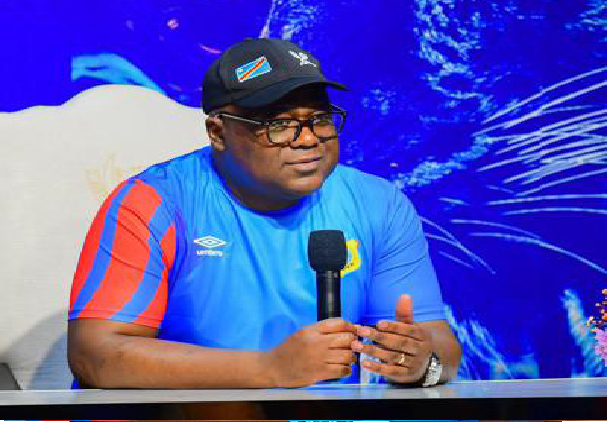
For a long time, Congolese football lived between
nostalgia and disillusionment. Nostalgia for the great generations of the
Democratic Republic of Congo's national football team, once capable of bringing
glory to the country across the African continent, and disillusionment in the
face of recurring crises, aging infrastructure, and inconsistent results. But
in recent years, a new energy has been revitalizing Congo's national sport. At
the heart of this dynamic is an essential political figure: Félix Tshisekedi. For
the Congolese head of state, football is not just a matter of sporting
competition. It represents a tool for national unity, international influence,
and popular pride. In a vast country marked by economic, social, and security
challenges, the exploits of the Leopards offer rare moments of collective
unity. And the president understood this very quickly.
By Jérôme Batungassana
A PRESIDENTIAL VISION FOR SPORT
From the moment he took
office, Félix Tshisekedi demonstrated his commitment to restoring Congolese
sport to a strategic position. Meetings with players increased, messages of
support became frequent, and sports authorities were urged to be more
professional. The president wanted to reposition the DRC among the leading
African football nations.
Behind the scenes, several
observers highlighted his personal involvement in certain sensitive matters
related to the national team: improving training conditions, institutional
mobilization around international competitions, logistical support, and diplomatic
accompaniment during the Leopards' travels.
This political will
gradually created a more stable environment for the national team. A major
change for Congolese football, long weakened by administrative tensions and
internal conflicts.
THE SÉBASTIEN DESABRE GAMBLE
One of the major turning
points in this renaissance was the appointment of Sébastien Desabre. The French
coach quickly embodied a new method based on rigor, discipline, and a deeply
humane management style. His ability to structure a group, empower players, and
establish a demanding work environment marks a break with certain past
practices. Behind this strategic choice lie several factors.
For the Congolese head
of state, football is not just a matter of sporting competition.
Sources close to Congolese
football indicate a clear desire on the part of the authorities to build a
sustainable project rather than a fleeting success. The objective is no longer
simply to shine occasionally, but to build a competitive national team for the
long term.
Gradually, the
collaboration between the coaching staff and the institutional environment is
producing visible results. The Democratic Republic of Congo's national football
team is rediscovering a more stable playing style, better team organization,
and strengthened mental fortitude.
One of the major turning
points in this revival remains the appointment of Sébastien Desabre.
Confidence is growing,
both in the locker room and in the stands. In this context, the idea of a
return to the forefront of African football is gradually ceasing to be a mere
dream and becoming a deliberate ambition.
THE
QUALIFICATION THAT CHANGED THE COUNTRY
Then came that historic
evening of March 31, 2026, in Guadalajara. By defeating Jamaica in extra time,
the Democratic Republic of Congo's national football team secured its place in
the 2026 FIFA World Cup.
This historic
qualification sparked an unprecedented wave of euphoria across the country. In
Kinshasa, the streets were quickly filled with thousands of jubilant fans.
Flags flew from vehicles, chants echoed late into the night, and social media
exploded. For many Congolese, this moment transcended the realm of sport: it
symbolized a resurgence of national pride and a kind of collective rebirth.
Félix Tshisekedi then
addressed a message of congratulations to the nation and the players. He could
be seen jumping for joy, surrounded by the First Lady and several other
dignitaries. He extended the celebration by joining the festivities in the main
square of Kintambo Magasin and throughout several streets of the capital.
Very quickly, this
qualification was perceived as a historic event, almost political in its scope,
so profound and unifying was its emotional impact on the population, bringing
hope to the entire nation.
FOOTBALL AS AN INSTRUMENT OF
NATIONAL UNITY
In a country as vast and
diverse as the DRC, football possesses a unique power: that of uniting people
beyond regional, linguistic, or political affiliations. For ninety minutes,
divisions fade away behind a single flag. It is precisely this dimension that
the Head of State seems to want to exploit. By supporting the Leopards, Félix
Tshisekedi is also counting on the unifying power of sport.
In a country as vast and
diverse as the DRC, football possesses a unique strength: that of uniting
people beyond regional, linguistic or political affiliations.
The national team's
successes then become moments of national unity in a context sometimes marked
by tensions. The president regularly appears alongside the players, speaks with
them before major competitions, and publicly praises their performances.
This close relationship
reinforces the image of a government attentive to the popular symbol that
football represents. But the renaissance of Congolese football cannot be
limited to the national team's performances. Several immense challenges remain:
modernization of sports infrastructure, development of training centers,
professionalization of the local league, and improvement of sports governance.
The true legacy of this
period will depend on the authorities' ability to transform popular euphoria
into a sustainable project. The Leopards' qualification for the June 2026 World
Cup now offers a historic opportunity: that of rebuilding the entire ecosystem
of Congolese football. For many fans, one thing is already certain: under Félix
Tshisekedi's leadership, Congolese football has rediscovered an ambition it
seemed to have lost.
And in a country where
football holds an almost sacred place, this renaissance is worth far more than
a simple sporting success. With Fatshi Béton, the DRC is moving forward and
making its mark.
CONGOLESE SOFT POWER UNDER
CONSTRUCTION
Long reduced in the
international media to its security and political crises, the Democratic Republic
of Congo is now attempting to reclaim its image through a different avenue:
cultural and sporting influence. This soft power strategy now relies as much on
stadiums as on diplomacy.
Theorized by Joseph Nye,
the concept of soft power refers to a state's ability to attract, influence,
and assert itself on the international stage not through force, but through
cultural, symbolic, and media appeal.
With Fatshi Béton, the
DRC is moving forward and asserting itself.
And in this area, the DRC
has strong arguments. First, a powerful and visible diaspora in several
European capitals. Second, a globally recognized popular culture, carried for
decades by Congolese rumba, a true marker of African identity.
Added to this is a youth
passionate about football, for whom the Leopards represent much more than a
national team: a symbol of unity and collective pride. But the main asset of
Congolese soft power undoubtedly remains its sporting ambassadors. Players like
Chancel Mbemba,
Yoane Wissa, and Cédric
Bakambu embody this new showcase of modern Congo. Performing well in major
European leagues, followed by millions of fans on social media, they project
the image of a talented, ambitious, and competitive country. Every goal, every
great continental or European performance then becomes a form of silent
diplomacy.
On the pitches of France,
England, or Turkey, these players indirectly carry the colors and visibility of
the DRC. Football thus becomes a universal language serving to promote national
influence. In this context, the recent successes of the DRC national football
team contribute to building a new Congolese narrative: that of a country that
wants to be seen not only through its difficulties, but also through its
talents, its energy, and its capacity to inspire the African continent. And
let the World Cup celebrations begin!
No comments for the moment