FIVE QUESTIONS FOR DIDIER BUDIMBU
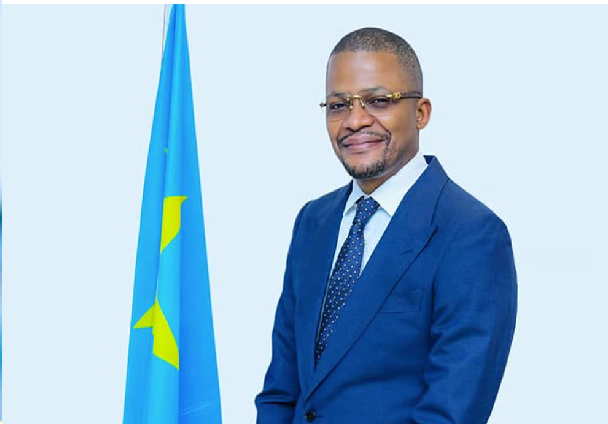
In a context where the Democratic Republic of
Congo's national football team is generating renewed hope and national pride,
sports authorities are called upon to play a decisive role in consolidating
this momentum. Between the ambition for performance, the structuring of local
football, and the demand for sustainable results, the Ministry of Sport finds
itself at the heart of a strategic challenge for the future of Congolese sport.
By Dodo Landu
1.
THE METROPOLISWhat
concrete role does your ministry play in the professionalization and
stabilization of the Leopards' performance, beyond recent sporting results?
DIDIER BUDIMBU : The ministry's role is not limited to
supporting the national team during competitions. Our ambition is to build a truly
sustainable model of sports governance.
We are working on several
fronts: improving athletes' training conditions, modernizing administrative and
technical support, and implementing a coherent long-term sports policy.
We have also strengthened
our collaboration with the Federation to further professionalize the
organization of national teams. The Leopards' recent performances are the
result of collective effort, but above all, of a clear political will to place
sport back among the national priorities.
2.
How is the Congolese state currently supporting the
national team's preparation in terms of infrastructure, logistics and
sustainable financing?
The Congolese state has
significantly increased its support for the Leopards. This is reflected in
improved logistical support during international training camps and
competitions, as well as progressive investments in sports infrastructure.
We know that modern
football demands appropriate equipment and high-level training centers.
That is why the government
is working to rehabilitate several strategic sports facilities and to seek
partnerships capable of supporting sustainable funding for Congolese sport. Our
goal is to gradually move away from ad hoc management to build a more stable
and attractive sports economy.
Our ambition is to build a genuine model of sustainable sports
governance.
3.
The
Leopards' historic qualification for the 2026 World Cup is seen as a turning
point: what public policies were decisive in achieving this result?
This qualification is
primarily the result of a collective vision and a national commitment to
football. Several decisions have contributed to this momentum: institutional
stability surrounding the national team, increased support for training camps
and international matches, and strengthened dialogue between sports authorities
and players.
We have also emphasized
the importance of discipline, administrative rigor, and adherence to
international sporting calendars. Today, the Leopards operate within a more
structured environment, allowing Congolese talent to fully realize its
potential. This momentum must now serve as a foundation for future generations.
4.
What
reforms are currently underway to ensure better coordination between the
ministry, the Federation, and the technical staff of the Leopards?
We have undertaken a
process of clarifying responsibilities to avoid the misunderstandings that have
sometimes weakened our football in the past. The Ministry plays its role of
institutional support, while the Federation retains its technical autonomy in
accordance with international regulations. The objective is to establish an
ongoing dialogue between all stakeholders: the Ministry, FECOFA, the technical
staff, the players, and the private partners. We are also working on monitoring
and evaluation mechanisms to ensure greater continuity in sporting projects.
Stability remains essential for achieving lasting results.
5.
Beyond the performance of the Leopards, how does the
government intend to transform this momentum into structuring development of
local football?
The Leopards' success must
become a catalyst for the entire Congolese football ecosystem. We want to
strengthen local leagues, support training centers, and encourage the emergence
of young talent across the country.
The government is also
considering a national strategy for identifying young players, in collaboration
with the provinces, schools, and sports academies. We want every talented young
Congolese to have access to a genuine training pathway.
Our ambition is clear: to
make football a tool for national cohesion, but also a sector that creates
jobs, opportunities, and international prestige for the Democratic Republic of
Congo.
The government is also
considering a national strategy for identifying young players, in collaboration
with the provinces, schools and sports academies.
And
in conclusion, Mr. Minister…
First and foremost, I
would like to thank the Congolese people for their unwavering support of our
Leopards. Football is now much more than a sport in the Democratic Republic of
Congo: it is a symbol of unity, hope, and national pride. Our collective
responsibility is to transform this popular enthusiasm into a genuine project
for sustainable sports development. The government will remain committed to
working alongside athletes, federations, clubs, and all Congolese youth to
build a stronger, better-organized football system capable of competing
sustainably on the international stage. The successes we celebrate today must
become the foundation for tomorrow's victories. Together, we can write a new
chapter in the history of Congolese sport.
No comments for the moment