DODO WORKS DOMO.TEAM MANAGER DES LEOPARDS
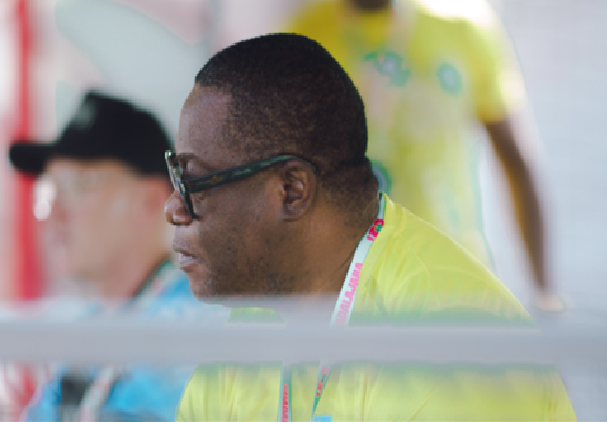
Long considered outsiders on the African scene, the
DRC national football team has made a historic comeback by securing their
qualification for the 2026 FIFA World Cup, 52 years after their only previous
participation.
Behind this spectacular resurgence lies a long-term
project carried out with rigor, discretion, and method by a dedicated technical
and administrative staff determined to restore Congolese football to its former
glory. Among the architects of this success is Dodo Landu, a true
behind-the-scenes figure and the organizational pillar of the Leopards.
Formerly a renowned goalkeeper in Matonge
(Kinshasa), now Team Manager of the national team and president of the Union of
Congolese footballers, he played a central role in the internal structuring of
the team, the administrative management of the players and the establishment of
a collective discipline which has become one of the strengths of the group.
In this exclusive interview, Dodo Landu looks back
on the behind-the-scenes of this historic qualification, his collaboration with
coach Sébastien Desabre, the secrets of the cohesion of the Leopards and the
ambitions of a nation that now dreams bigger on the international stage.
By Jérôme Batungassana
THE METROPOLIS : 52 years later, the DRC is finally
back at the World Cup. What are your personal feelings as Team Manager of the
Leopards?
DODO WORKS : It's a source of immense pride. We know we've written an important page
in the history of Congolese football. Behind this qualification lie many
sacrifices, hard work, sleepless nights, and above all, a collective belief.
Seeing the Congolese people smile again thanks to the Leopards is the greatest
reward.
Discipline,
organization and unity changed the destiny of the Leopards
Many talk about the work of coach Sébastien Desabre,
but less about the internal organization. What exactly was your role in this
historic qualification?
The Team Manager's role is
often behind the scenes, but it's essential. We worked on the team's overall
organization: logistics, travel, equipment, player administrative files, and
relationships with clubs, FIFA, and CAF. Our mission was to ensure that the
players and coaching staff could operate in the best possible conditions.
You have often emphasized discipline and team
cohesion. How did you manage to instill this culture within the Leopards?
We established a clear
framework from the outset. Each player knew their responsibilities and the
rules of how the group operated. But beyond the rules, we prioritized dialogue,
mutual respect, and a family atmosphere. When a group shares the same goals,
thediscipline becomes natural.
The administrative management of modern players has
become very complex. What were the biggest challenges encountered during this
qualifying campaign?
Today, international
football demands extremely rigorous organization. Behind every match, there is
a huge amount of administrative and logistical work that the public doesn't
always see. During this qualifying campaign, we had to anticipate several
aspects: visas, FIFA-related documents, travel authorizations, bookings, but
also the ongoing coordination with the clubs of players based abroad.
There were sometimes
last-minute changes, injuries, scheduling conflicts, or urgent situations that
needed to be resolved within hours. In these kinds of situations, you have to
be very responsive and keep your cool. The most important thing was to maintain
a professional organization so that the players could remain focused solely on
the pitch. I think this administrative rigor and ability to anticipate also
contributed to the stability of the group and, ultimately, to the Leopards'
historic qualification for the 2026 World Cup.
It is often said that a great team is built on the
details. In your opinion, what are the invisible details that have changed the
face of the Leopards today?
Details make all the
difference at the highest level. We improved preparation, recovery, video
analysis, physical monitoring with GPS, and above all, internal communication.
Every detail mattered. The players felt they were operating in a professional
environment, and this boosted their confidence.
Seeing
the Congolese people smile again thanks to the Leopards is the greatest reward.
Your collaboration with Sébastien Desabre seems to
be one of the keys to your current success. How does this partnership work on a
daily basis?
The coach has brought a
modern vision and high standards. We constantly exchange ideas on all aspects
related to the team. There is mutual trust and, above all, a shared desire to
help the Leopards progress. Everyone knows their role and works in the
collective interest.
You are also president of the Congolese Footballers'
Union. How does this experience help you in the human resources management of
international players?
My experience leading the
Congolese Footballers' Union has taught me a great deal about the human
dimension of modern football. Behind every international player, there is a
man, a family, a career, responsibilities, and sometimes difficulties that the
public is unaware of. This role allows me to better understand their daily
realities, their expectations, and also the pressures they face in their clubs
and with the national team.
My
experience leading the Congolese Footballers' Union has taught me a lot about
the human dimension of modern football.
In managing a high-level
group like the national football team, dialogue is fundamental. A player who
feels listened to, respected, and valued often gives their best on the field.
We have always prioritized communication, listening, and mutual respect to
create a climate of trust within the group.
Today, players need a
professional environment, but also a human one. It is this closeness, this
understanding, and this cohesion that allowed the Leopards to remain united in
difficult times and to achieve this historic qualification for the 2026 World
Cup.
Congolese fans have rediscovered a true sense of
pride in the Leopards. What message would you like to send to the Congolese
people after this historic qualification?
I would like to thank all
the Congolese people for their exceptional support. This qualification belongs
to the entire nation. The prayers, encouragement, and love of the public have
carried the players. We ask the people to continue to believe in this team.
Having reached the semi-finals of the AFCON and
secured qualification for the World Cup, what are the real ambitions of the DRC
on the international stage?
The DRC must now think
like a major footballing nation. We no longer want just to participate; we want
to be competitive against the best teams in the world. This will require hard
work, stability, and the development of football at all levels.
What
would you say today to young Congolese people who dream of serving their
country in the shadows, like you, without necessarily being in the spotlight?
I would tell them that
hard work always speaks for itself. You can serve your country with passion
without necessarily being in the spotlight. Great achievements are often built
by those who work behind the scenes. You have to believe in your dreams, remain
disciplined, and work honestly.
I
would tell them that hard work always speaks for itself. You can serve your
country with passion without necessarily being in the spotlight.
Many observers of Congolese football believe that
some players in the national league, as well as several dual nationals
performing well in Europe, do not receive enough opportunities to play for the
national team. How does the Leopards' coaching staff currently evaluate the
selection criteria, and what guarantees can you offer regarding fairness,
monitoring, and the integration of Congolese talent, whether they play in the
country or abroad?
The national team remains
open to all Congolese players capable of adding value to the Leopards, whether
they play in the country or abroad. We regularly monitor the performances of
players in the national league as well as those of dual nationals playing in
Europe. But wearing the Leopards jersey isn't solely about talent. Current
form, consistency, top-level experience, adaptation to the playing style, and
commitment to the national team must also be considered. We understand the
public's expectations regarding certain local or dual-national players, and we
are working to strengthen scouting to give greater visibility to national
talent. Our goal remains to build a competitive, balanced team capable of
proudly representing the DRC.
If you had to summarize this generation of Leopards
in three words, which would you choose?
Discipline, unity and
ambition.
And the final word?
With the World Cup just
days away, it's a time for dreams, unity, and passion. Football brings people
together, thrills nations, and inspires a whole generation. May this
competition be a celebration of talent, fair play, and pushing beyond limits.
The world is ready; let the show begin.
No comments for the moment