CONGO CELEBRATES ITS 66TH ANNIVERSARY: WHERE DENIS SASSOU N'GUESSO IS HE LEADING THE COUNTRY?
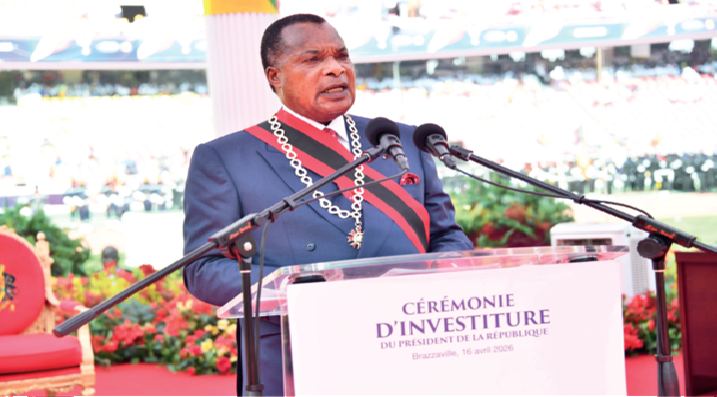
On August 15, 2026, the Republic of Congo celebrates the 66th anniversary of its independence. As every year, this date is an opportunity to remember the progress made since 1960, but also to question the future.
This
edition, however, holds particular significance: it comes a few months after
the re-election of President Denis Sassou N'Guesso to a fifth term. Beyond the
official ceremonies, parades, and commemorative speeches, one question lingers
in people's minds: where is Congo headed, and what direction is its head of
state setting it?
SIXTY-SIX YEARS OF INDEPENDENCE:TIME FOR REVIEW
At 66, a nation enters maturity. For Congo, the time
is no longer just for recalling the hopes of independence, but also for
evaluating the path traveled and the results achieved. The country has
experienced periods of prosperity, particularly thanks to its oil resources,
but also political crises, armed conflicts, and economic difficulties.
Despite these upheavals, the Congo has preserved its
territorial integrity and remains one of the most stable states in the Central
African sub-region. This stability is one of the main arguments in favor of the
ruling power. On March 15, 2026, President Denis Sassou N'Guesso was re-elected
for a fifth consecutive term with more than 94% of the vote, according to
official results. At 82 years old, he thus extends one of the longest reigns on
the African continent, having previously led the Congo from 1979 to 1992, and
again since 1997.
After several decades at the helm of the state,
Denis Sassou N'Guesso presents his record as that of a nation-builder who
ensured peace, developed infrastructure, and strengthened Congo's diplomatic
influence. For his supporters, this political continuity guarantees security
and stability in a regional environment often marked by crises and
uncertainties.
STABILITY IS IT STILL ENOUGH?
But stability, however precious, does not meet all
expectations. For many Congolese, daily concerns remain employment, the cost of
living, access to quality healthcare, education, clean water, and electricity.
The Congolese paradox remains: how can a country endowed with significant
natural resources still struggle to transform its wealth into shared
prosperity? This is likely the challenge of the new term. History will remember
less the number of years spent in power than the ability to bring about lasting
change in the living conditions of the population.
As John F. Kennedy reminded us:“Change is the law
of life. And those who only look at the past or the present will inevitably
miss the future.”At 66 years of independence, Congo is called upon to take
a new step: to move from an economy heavily dependent on oil to a diversified
economy, creating jobs and geared towards innovation.
No nation can build its future
by keeping its vital forces in a state of waiting or discouragement.
A YOUTH IN SEARCH FOR A SPACE
The future of Congo can also be seen in the eyes of
its youth. Representing the majority of the population, this generation was
born well after independence and no longer judges public action by the
struggles of the past, but rather by the concrete opportunities offered in the
present. They aspire to entrepreneurship, digital literacy, social mobility,
access to decent employment, and more active participation in public life and decision-making
processes.
This generation is also better connected to the
world, more informed, and more demanding. They observe global transformations
and compare their perspectives with those of other societies, which reinforces
their expectation of rapid and tangible results in education, employment, and
innovation. At the same time, they face significant challenges, including
unemployment, the mismatch between education and the job market, and difficulty
accessing financing for entrepreneurial initiatives. In this context, the main
challenge of the coming five-year term lies in building a genuine contract of
trust between the State and this generation.
This requires public policies capable of promoting
skills training, supporting entrepreneurship, developing digital infrastructure
and creating real spaces for professional integration and civic participation.
The fundamental issue may lie elsewhere: what vision do
the Congolese themselves have for their nation over the next sixty-six years?
No nation can build its future by keeping its most
dynamic forces in a state of waiting or discouragement. Investing in youth is
not merely a political option, but a strategic necessity for long-term
stability and growth.
As Nelson Mandela reminded us:"Today's youth
are tomorrow's leaders."The Congo of tomorrow will thus be shaped by
its young graduates, its modernized farmers, its researchers, its
entrepreneurs, its artists, its athletes and all those who, through their
creativity and commitment, will contribute to transforming the country's
potential into sustainable and inclusive development.
THE QUESTION INSTITUTIONAL
Every celebration of independence also invites us to
reflect on the strength of our institutions. The strongest nations are not
based solely on individuals, however influential they may be, but on
institutions capable of ensuring the continuity of the state, guaranteeing
national cohesion, and calmly preparing for the future.
It is within this framework that the thinking of US
President Barack Obama is situated, who recalled during a speech in Ghana in
2009:“Africa does not need strong men, but strong institutions.
» This declaration underscores the importance of building sustainable
political and administrative systems, founded on stable rules rather than
personalities. Thus, beyond the leaders themselves, it is the robustness of
institutions that determines a state's stability, the quality of its
governance, and its capacity to plan for the future. In this respect, one of
the major challenges of the coming years will be the transmission and renewal
of political, administrative, and economic elites. Preparing for the future
does not mean denying the past. It means enabling future generations to
gradually take their place in the conduct of public affairs.
THE LEGACY OF A GENERATION
Denis Sassou N'Guesso belongs to the generation of
leaders who have marked the political history of contemporary Congo. His name
will remain associated with several decades of national life.
But as the country celebrates its 66th year of
independence, the question of legacy now transcends individuals.
What kind of Congo will we leave to future
generations? A Congo still dependent on its natural resources, or a productive
and innovative Congo? A Congo where young people seek their future elsewhere,
or a Congo capable of retaining its talent?
A Congo turned towards divisions or a Congo
reconciled with itself and confident in its destiny?
INDEPENDENCE AS PERMANENT
PROJECT
August 15th cannot be reduced to the mere
commemoration of a historical event. Independence is never a definitive
achievement; it remains an ongoing struggle, nurtured daily by economic
development, strong institutions, social justice, and civic engagement. At 66
years old, the Congo possesses considerable assets: abundant natural resources,
a dynamic youth, recognized expertise, and political experience forged by the
trials of its history.
Therefore, the question is not simply where
President Denis Sassou N'Guesso intends to lead the country. The fundamental
issue perhaps lies elsewhere: what vision do the Congolese people themselves
hold for their nation over the next sixty-six years? It is in this collective
reflection that the true meaning of the national holiday resides. As Julius Nyerere
emphasized: "The future belongs to those who prepare today what they want
to see tomorrow." An invitation to make every citizen a conscious and
responsible actor in the nation's destiny.
This perspective resonates particularly strongly in
the inaugural address delivered by President Denis Sassou N'Guesso on April 16,
2026, in Kintélé. Beyond the political continuity he emphasized, the Congolese
Head of State outlined a broader ambition: to transform the institutional
stability achieved over the years into a lever for economic, industrial,
logistical, energy, and technological development. In a context marked by
still-high debt, growing social expectations, and the need to diversify the
economy, the challenge of the new term is clearly defined: to accelerate the
country's modernization while preserving its economic sovereignty and its
capacity to freely define its own development model.
Internationally, the message addressed to Congo's
partners is just as explicit. Whether it be African, European, or Gulf
investors already present in the port, logistics, and industrial sectors,
Brazzaville intends to consolidate its image as a stable, predictable, and
business-friendly state.
But beyond economic attractiveness, the stated
ambition is to gradually break free from the limitations of an economy
essentially based on oil revenues, in order to build more diversified growth
that creates jobs and generates local added value. Sixty-six years after
independence, Congo thus finds itself at a crossroads: preserving the gains of
stability while opening a new cycle of economic and social transformation. It
is in this balance between continuity and renewal that the face of tomorrow's
Congo could be shaped.
No comments for the moment